How ChatGPT Search works for small businesses: what OpenAI documents
OpenAI says ChatGPT can search automatically when a question would benefit from web information, may rewrite a prompt into targeted queries, and can show citations and a Sources panel. For inclusion, allow OAI-SearchBot in robots.txt and allow OpenAI's published search-bot IP ranges through your host or CDN. GPTBot is a separate training crawler, while ChatGPT-User handles some user-initiated visits. OpenAI says ranking uses factors intended to find reliable, relevant information and that top placement cannot be guaranteed. Its publisher documentation also says ChatGPT referral URLs include utm_source=chatgpt.com.
ChatGPT Search is a web-search experience inside ChatGPT. For a small business, the useful question is not how to write for a mysterious AI taste. It is which parts of discovery and inclusion OpenAI actually documents, which controls belong to the publisher, and which outcomes remain outside anyone's guarantee.
What happens when ChatGPT searches
OpenAI says ChatGPT can search automatically when a question may benefit from web information, and a user can also select Search explicitly. When it works with third-party search providers, ChatGPT Search may rewrite the user's prompt into one or more targeted queries and may send additional, more specific queries after reviewing initial results.
A search response may contain inline citations. When inline citations are absent, the interface can provide a Sources panel with cited sources and other relevant links. This means a source link can be part of the answer experience, but it does not mean every crawlable page will be retrieved, cited or ranked prominently.
Illustrative search flow
This diagram summarizes the public documentation at a high level. It is not a disclosure of OpenAI's internal architecture or ranking weights.
Access makes inclusion possible; relevance and reliability still do not guarantee placement.
The three OpenAI user agents publishers should not confuse
- •OAI-SearchBot: the crawler OpenAI documents for surfacing websites in ChatGPT search features. OpenAI recommends allowing it in robots.txt and allowing its published IP ranges.
- •GPTBot: a separate crawler for content that may be used to improve and train OpenAI foundation models. It can be allowed or disallowed independently from Search.
- •ChatGPT-User: used for certain user-initiated actions. OpenAI says it is not an automatic web crawler, robots.txt rules may not apply to those user actions, and this agent does not determine Search inclusion.
What OpenAI says about ranking
OpenAI's Search help page says ranking uses a number of factors designed to help users find reliable, relevant information, and that there is no way to guarantee top placement. The published page does not provide factor weights, an ideal article format or a citation formula. Treat anyone selling guaranteed ChatGPT placement as making a promise the official documentation does not support.
The official pages reviewed here describe robots controls and IP access. They do not instruct publishers to create llms.txt, special AI schema or a dedicated AI writing style. Read our separate llms.txt analysis for the evidence boundary around that optional convention.
The minimum technical checklist
- •Allow OAI-SearchBot to crawl the public pages you want eligible for summaries and snippets.
- •Allow requests from OpenAI's published SearchBot IP ranges through your host, CDN and web application firewall.
- •Keep private account, checkout and API paths blocked independently from public marketing content.
- •Use noindex on a public page when you do not want the link and title surfaced through the publisher behavior OpenAI documents; the crawler must be able to fetch the page to read that meta tag.
- •Manage GPTBot separately according to the business's training preference.
- •After a robots.txt change, allow for the approximately 24-hour adjustment window stated in OpenAI's crawler documentation.
- •Verify with real server or CDN logs when possible; changing only the user-agent string in a test request does not prove that OpenAI's real IP ranges pass the firewall.
A dated Template Market access check
On 12 July 2026, templatemarket.cc/robots.txt allowed the wildcard user agent on public paths and disallowed API, account, checkout and authentication routes. The homepage, this article's existing URL and the Orbiq product page returned HTTP 200 to a request carrying an OAI-SearchBot user-agent string.
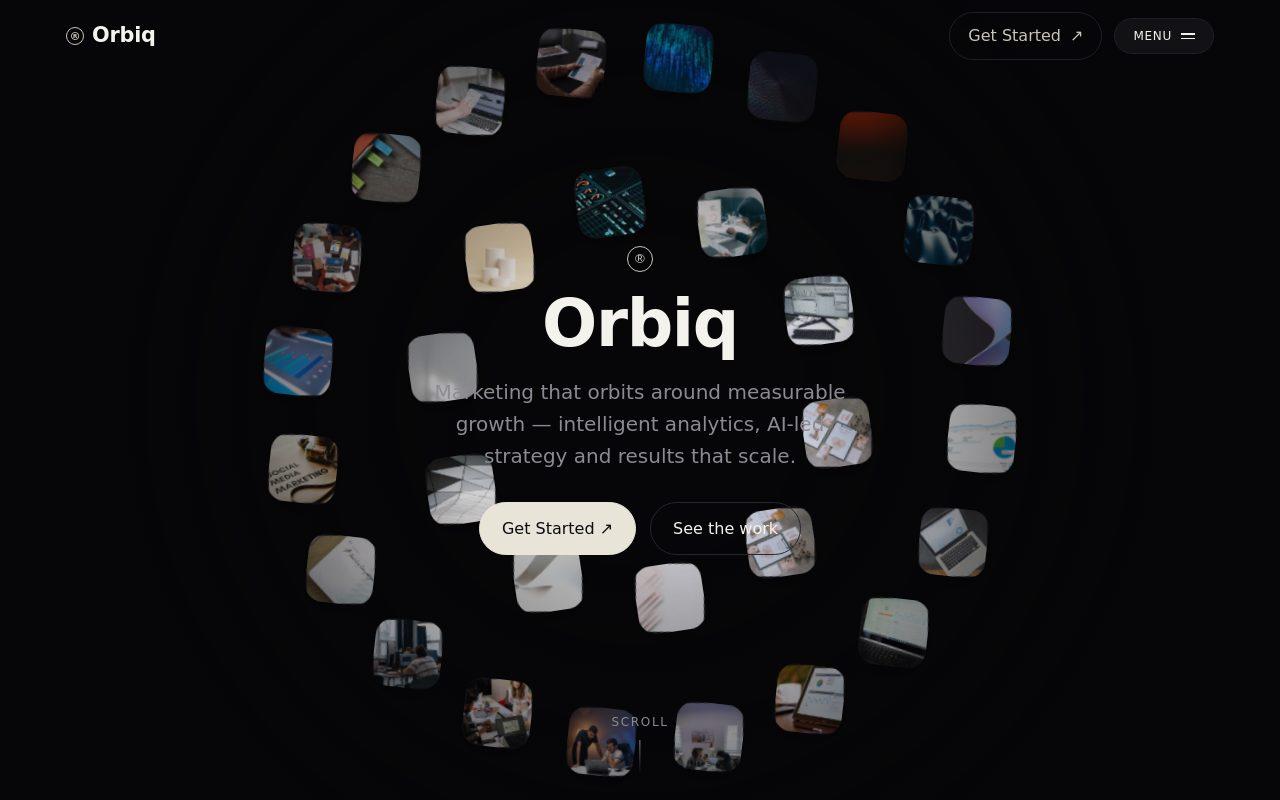
Orbiq as a test URL
Orbiq is included here only as a real public product URL in Template Market's crawler-access checklist—not as proof that ChatGPT has indexed, ranked or cited it.
- The Template Market product detail URL returned HTTP 200 in the dated user-agent test.
- The public preview is linked from the product page and exposes ordinary HTML.
- No ChatGPT inclusion or citation result is claimed.
Content work: what is recommendation, not ranking documentation
OpenAI uses the words reliable and relevant but does not publish a template for earning those labels. Our editorial recommendation is therefore conservative: publish accurate service details, locations, dates, prices, limitations and first-hand evidence that a customer can verify. Keep important facts visible and current because that helps people even when no AI system cites the page. Do not present this advice as a documented ChatGPT ranking factor.
The same evidence discipline applies to broader AI-search work. Our AEO and GEO evidence framework separates confirmed controls from safe editorial practice and experiments.
Measure what OpenAI exposes
OpenAI's publisher FAQ says referral URLs from ChatGPT Search automatically include utm_source=chatgpt.com. Create an analytics segment for that parameter, then track landing page, engaged visit and business outcome. A citation seen in one manual query is a useful observation, but it is not a complete visibility metric and can vary with query wording, location, time and product behavior.
- •Record the date when crawler access and firewall rules were verified.
- •Segment referrals carrying utm_source=chatgpt.com instead of combining all direct and referral traffic.
- •Review which landing pages receive useful visits and whether those visits reach a product, contact or purchase step.
- •Keep a small manual query sample only as an experiment; label it separately from analytics.
- •Do not infer zero visibility solely from zero referrals, and do not infer broad ranking success from one citation.
Common implementation mistakes
- •Allowing GPTBot while blocking OAI-SearchBot, then assuming training access also enables Search.
- •Updating robots.txt but leaving a Cloudflare challenge or firewall rule that blocks the published SearchBot IP ranges.
- •Using Google indexation as a proxy for OpenAI access instead of checking the provider-specific crawler.
- •Blocking crawling and expecting a noindex meta tag on the blocked page to be read.
- •Treating ChatGPT-User as the automatic Search crawler.
- •Publishing speculative llms.txt or schema claims as official OpenAI requirements.
- •Promising a citation or top placement after a technical access change.
A clean technical base still helps a site serve people and multiple crawlers, but it should not be sold as a ChatGPT shortcut. See the template SEO audit for that broader distinction.
The practical conclusion
For a small business, the confirmed work is modest but important: make public pages available to OAI-SearchBot, allow the published IP ranges, manage GPTBot independently, keep private routes private and measure the referral parameter OpenAI provides. Everything beyond that should be presented as editorial practice or an experiment—not a guaranteed ChatGPT ranking method.
Official OpenAI sources reviewed
- Overview of OpenAI crawlers — OpenAIUsed for OAI-SearchBot, GPTBot, ChatGPT-User, independent controls, published IP ranges and the stated robots adjustment window.
- ChatGPT Search — OpenAI Help CenterUsed for automatic Search, targeted query rewriting, citations, Sources, ranking language and the no-guarantee statement.
- Publishers and Developers FAQ — OpenAI Help CenterUsed for inclusion guidance, noindex behavior, separate training preference and utm_source=chatgpt.com referral tracking.