How to structure a web design agency website around proof
Choose the selling motion before choosing the page list. A portfolio-led studio can foreground selected work, an evidence-led agency can foreground outcomes and pricing signals, and a specialist consultancy can foreground operational problems and case studies. Our recommended core is Home, Work, individual case studies, Services, Studio/About and Contact. Add Pricing or Journal only when you can maintain useful, accurate content there. The examples below come from the current Voidline, Orbiq and Synvera products.
An agency website has to demonstrate the same judgment the agency sells. That does not mean adding every fashionable section. It means deciding what a qualified buyer must understand, what proof reduces doubt, and what next step fits the size of the engagement.
Start with the selling motion, not the sitemap
Three agencies can offer similar services and need different sites. A design studio may win through a small number of visually memorable projects. A performance agency may need transparent methods, quantified outcomes and pricing signals. An automation consultancy may need to name operational problems before its service categories make sense. The information architecture should reflect that difference.
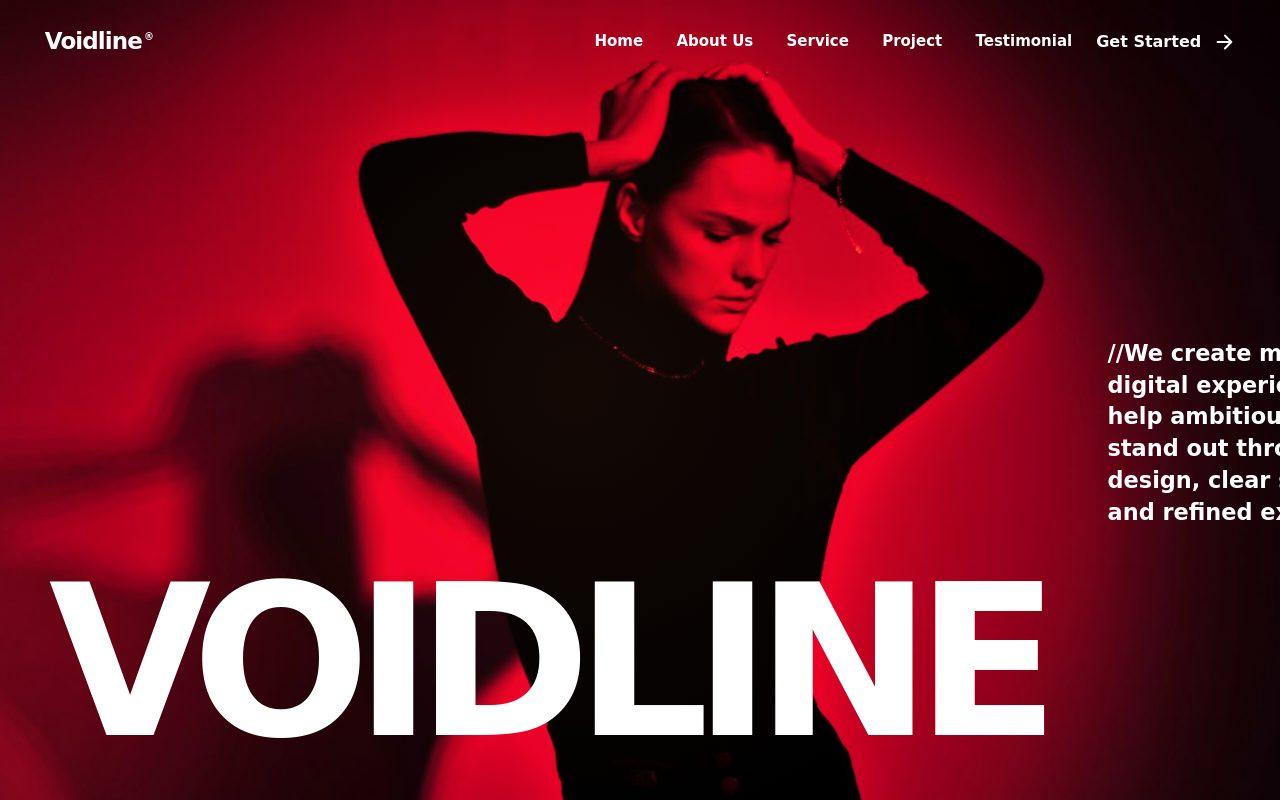
Voidline
Voidline uses a portfolio-led structure for branding, UI/UX and boutique development studios. Its catalog scope includes Home, About, Services, Work, six case-study pages, Testimonials and Contact.
- The inspected homepage moves from studio statement to services, latest work, process, team, testimonials, a question section and contact.
- Dedicated case-study URLs let a visitor examine individual work instead of relying on a logo wall.
- This route fits an agency whose strongest evidence is the work itself.
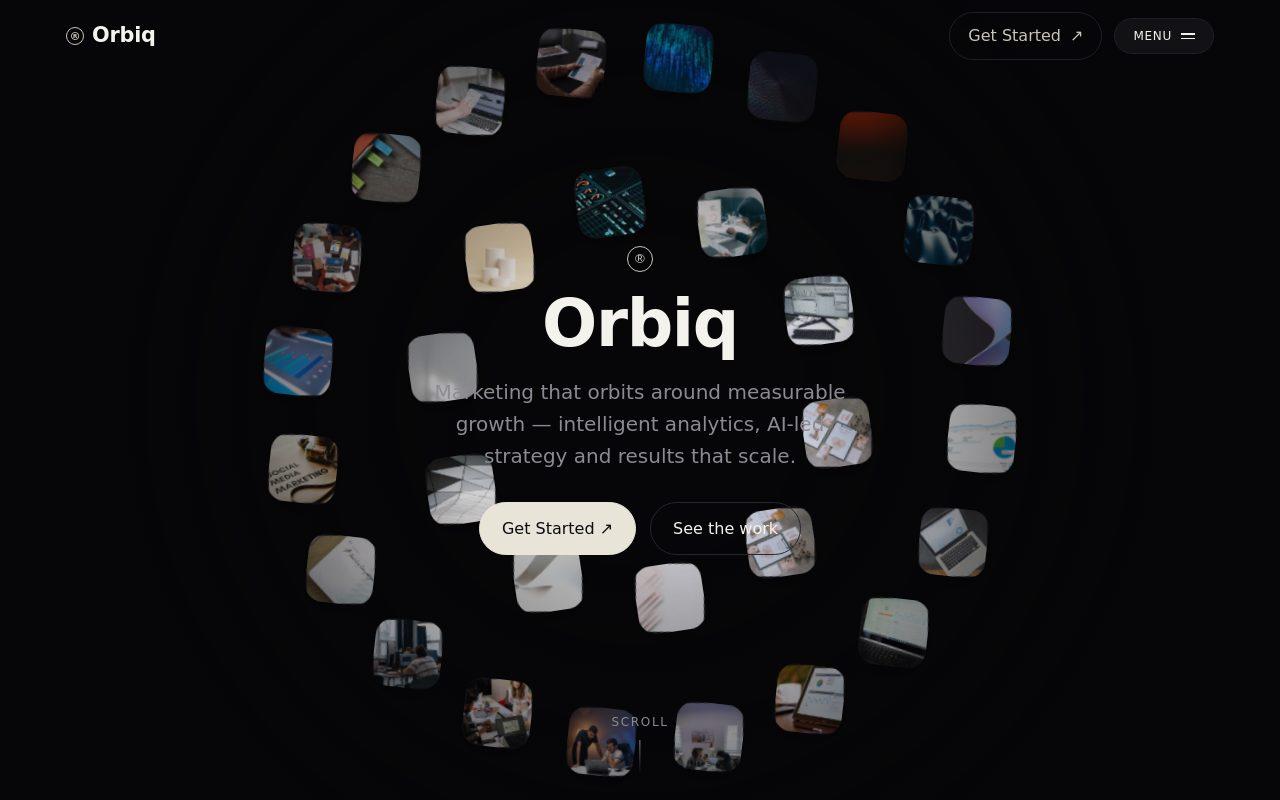
Orbiq
Orbiq uses an evidence-led structure for growth, performance and data-oriented agencies. Its seven-page catalog includes Home, Studio, Work, Services, Pricing, Journal and Contact.
- The inspected homepage combines service categories, named work examples, testimonials, pricing and a final call to action.
- Work and Pricing receive their own pages, which suits a buyer who needs evidence and commercial framing before contact.
- Any demo percentages, clients and claims must be replaced with authorized agency evidence.
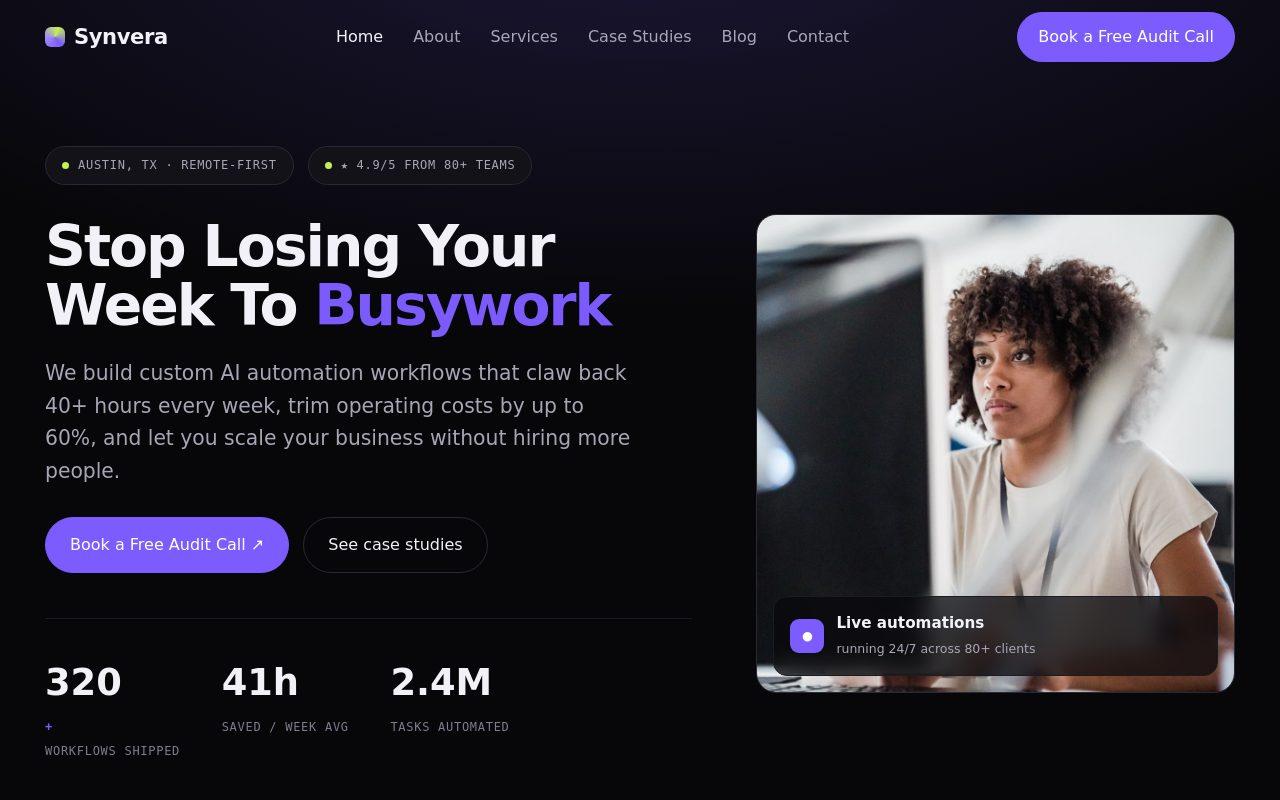
Synvera
Synvera uses a problem-and-solution structure for automation studios and technical consultancies. Its catalog includes Home, About, Services, Case Studies, three case-study details, Blog, three article details and Contact.
- The inspected homepage names operational problems before presenting services and process.
- It then exposes cases, industries, testimonials, pricing, articles and a final call to action.
- This route fits a specialist agency whose buyer recognizes the problem before knowing the service name.
The six-page core we recommend
- •Home: a clear positioning statement, selected proof and routes to Work, Services and Contact.
- •Work: a curated index that helps buyers find a relevant project by problem, sector or capability.
- •Case study detail: context, constraints, agency role, decisions, artifacts, outcome and permission to show the evidence.
- •Services: the problems you solve, what is included, what is not included and how an engagement progresses.
- •Studio or About: the people responsible for the work, their point of view and the operating model.
- •Contact: a qualified but low-friction next step with response expectations and alternative contact details.
A homepage sequence that works as an argument
- •Positioning: name the client, the meaningful outcome and the agency's angle without stacking vague adjectives.
- •Selected work: show two to four relevant projects and state why each belongs on the page.
- •Services: group capabilities around buyer problems rather than an internal org chart.
- •Method: make the engagement legible, including collaboration points and client responsibilities.
- •Proof: use authorized testimonials, project artifacts, before-and-after context or measured outcomes with a method.
- •Commercial signal: state a range, minimum, package type or at least the factors that change scope.
- •Next step: ask for only the information needed to decide whether a conversation is useful.
An illustrative hero pattern
Illustrative positioning-first agency hero
This demo is original teaching material. It shows the information hierarchy, not a guaranteed conversion formula.
Strategy, UX and interface systems for funded SaaS teams preparing a launch or redesign.
<section class="agency-hero" aria-labelledby="agency-title">
  <p class="eyebrow">Independent product design studio</p>
  <h1 id="agency-title">We turn complex B2B software into products teams can explain and customers can use</h1>
  <p>Strategy, UX and interface systems for funded SaaS teams preparing a launch or redesign.</p>
  <a href="work.html">See relevant work</a>
  <a href="contact.html">Discuss a project</a>
</section>What a useful case study needs
- •Context: who the client serves and what was happening before the engagement.
- •Constraint: the deadline, technical limitation, market condition or organizational issue that shaped the work.
- •Role: exactly what the agency owned, collaborated on or did not control.
- •Decision: the important alternatives considered and why one direction was chosen.
- •Artifact: enough real screens, flows, prototypes, research material or implementation detail to inspect the work.
- •Outcome: a measured result when available, or a precise qualitative outcome when measurement was not possible.
- •Evidence note: the date, source and client permission behind every named number or testimonial.
- •Next step: a route to a relevant service or contact—not a generic button repeated without context.
A case study does not need a dramatic percentage to be credible. It does need to distinguish the agency's contribution from the client's product, media spend, sales team and market conditions. If a number cannot be sourced and explained, use an honest qualitative result instead.
Structure services around decisions
A prospective client is rarely trying to memorize your discipline list. They are deciding whether their problem fits your process, whether the engagement is appropriately sized and whether your team can deliver it. Each service page should therefore connect symptoms, scope, deliverables, collaboration, exclusions, timing factors and related proof.
Contact without unnecessary friction
Ask only for information someone can reasonably provide before a first call: name, work email, company or project, a short description and an optional budget or timing range. Explain what happens next and when. If procurement, employment or partnerships use different routes, separate them so the project form stays focused.
The structure should also support discovery. A web design agency can link detailed work to relevant services and insights rather than leaving every page isolated. Compare this architecture with the digital marketing agency structure and use the internal linking strategy to plan contextual routes.
Avoid turning the agency site into a page factory
Do not create a separate thin page for every service-and-city combination merely because the keyword exists. Split a page when the audience, evidence, process or offer is genuinely different. Otherwise, one substantial service page with relevant case studies is easier to trust and maintain.
Choosing among the current examples
Choose Voidline when individual creative work should lead the pitch, Orbiq when evidence and commercial framing should be prominent, and Synvera when the buyer needs a problem-to-solution explanation with deeper cases and articles. These are editorial fit recommendations based on the current page inventories, not performance or conversion rankings.
Before committing, apply the template evaluation checklist to the exact source, page count and customization plan.
First-party examples reviewed
- Voidline live preview — Template MarketHomepage structure and linked page routes inspected on 12 July 2026.
- Orbiq live preview — Template MarketHomepage structure and linked page routes inspected on 12 July 2026.
- Synvera live preview — Template MarketHomepage structure and linked page routes inspected on 12 July 2026.