Do website templates hurt SEO? Myths, risks and a real source audit
Google's published guidance does not identify the use of a website template as a penalty. A template can provide useful technical foundations, but it cannot make copied demo text, incorrect metadata, weak internal links or mass-produced content valuable. Our dated source inspection found solid basics in both Oasa and Orbiq, plus different items a buyer should customize before launch. We did not run a controlled performance or ranking test, so this article makes no speed or ranking claims about either product.
A template is a starting set of HTML, CSS, JavaScript and design decisions. Google does not publish a rule that penalizes a page because that starting point was sold to more than one buyer. Its current guidance focuses on useful, non-commodity content, crawlability, technical clarity and a good experience after the visitor arrives. That distinction matters: a template can support the foundation, but the owner is still responsible for the finished site.
There is no automatic template penalty
Google's generative-AI optimization guide, last updated 10 July 2026, says that ordinary SEO remains the foundation. It prioritizes original experience and non-commodity information, warns against creating many similar pages for query variations, and says there is no required AI writing style, content chunking method, special schema or llms.txt file. The guide also says perfectly semantic HTML is not required, although semantic structure is useful for people and assistive technology.
What we inspected on 12 July 2026
We inspected the public HTML served by Oasa and Orbiq, the supporting robots.txt and sitemap.xml responses, and the page inventory stored in Template Market's local catalog database. We counted visible technical elements; we did not infer rankings from them. We also did not run a controlled Lighthouse comparison, field Core Web Vitals study or search-ranking experiment.
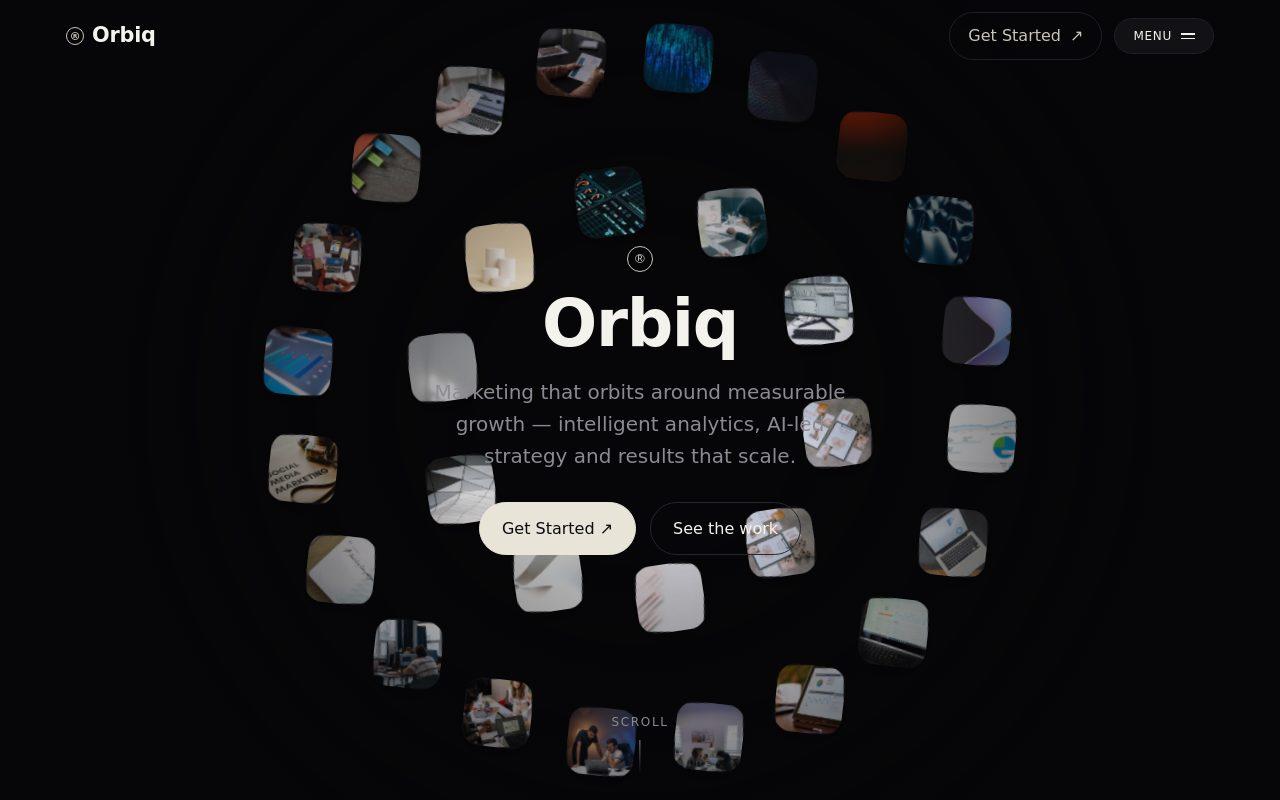
Orbiq
Orbiq is a seven-page agency template. Its live homepage returned HTTP 200 and included a title, meta description, canonical URL, robots directive, one H1, a main landmark and three JSON-LD blocks at the time of inspection.
- The preview host served both robots.txt and a sitemap listing its seven primary pages.
- All seven inspected primary pages had one H1 plus header, main and footer landmarks.
- The structured data contains fictional demo-business details; a buyer must replace or remove those details before launch.
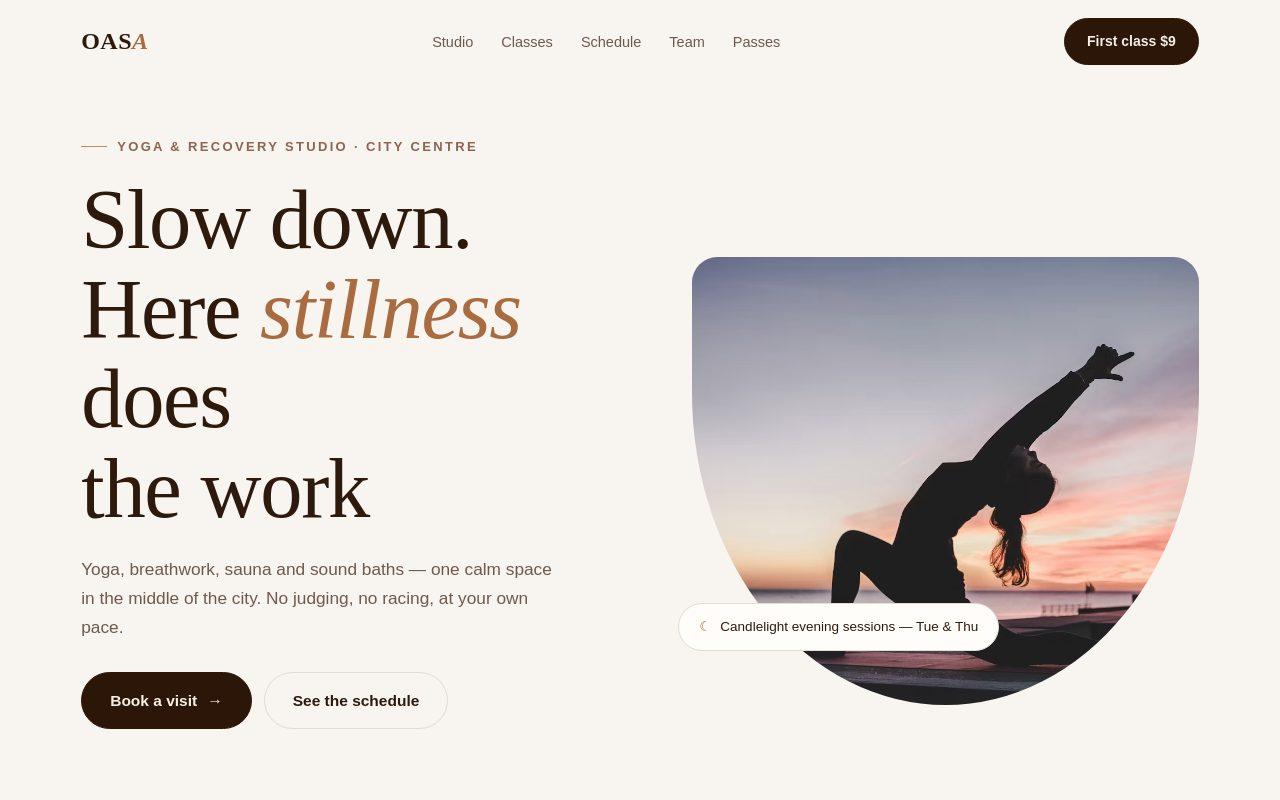
Oasa
Oasa is a one-page wellness template. Its live homepage returned HTTP 200 and included a title, meta description, robots directive and one H1. The preview host also served robots.txt and a one-URL sitemap.
- All 21 images in the inspected HTML had an alt attribute; four used an empty value, which still needs a human check to confirm that each image is decorative.
- The inspected page did not contain a canonical link, JSON-LD block or main landmark.
- Those omissions are customization tasks, not evidence of a penalty or proof that the site cannot rank.
What the comparison actually shows
Both products expose content in ordinary HTML and include basic search metadata. They differ in scope and in how much launch-specific metadata is already present. Orbiq supplies more SEO-related scaffolding, but that scaffolding contains demo entities that become wrong if left unchanged. Oasa supplies a smaller one-page base and leaves more setup to the owner. Neither outcome is automatically better: accurate, intentional configuration matters more than the number of tags.
Five common template SEO myths
- •Myth: shared layout means duplicate content. The layout may be shared, but the business proposition, copy, services, evidence, media and internal relationships should be original. Reusing the demo copy is the real content problem.
- •Myth: valid HTML guarantees ranking. Validation is a useful quality check, not a ranking certificate. Google explicitly says the web does not need perfectly semantic HTML to be understood.
- •Myth: adding more schema makes a template AI-ready. Google says no special schema is required for generative AI search. Structured data should describe visible, accurate content and target a currently documented feature.
- •Myth: a fast demo proves every customized copy will stay fast. New fonts, tracking scripts, video, oversized images and third-party widgets can change the result. Test the finished site, not only the original preview.
- •Myth: an SEO template can compensate for generic content. A technically tidy page can still be unhelpful. Google places unusually strong emphasis on original experience and information that could not be produced by simply summarizing the web.
Where template-based sites really go wrong
- •Demo titles, canonicals, organization schema, addresses or social profiles remain unchanged after purchase.
- •The owner publishes the same supplier copy, stock proof and placeholder testimonials as other sites using the product.
- •Important pages are isolated because navigation and contextual internal links were never planned.
- •Large images, new scripts and embeds are added without measuring the completed site.
- •Heading levels, labels, focus behavior or mobile navigation are treated as decoration instead of interface structure.
- •Dozens of city, service or industry pages are generated from one paragraph pattern mainly to capture query variations.
The code questions deserve their own inspection. Use our clean template code checklist before buying, then measure the finished build with the methodology in the technical performance guide.
The larger risk is mass-produced content
Google defines scaled content abuse as creating many pages primarily to manipulate rankings rather than help users, usually with large amounts of unoriginal material that adds little value. The creation tool is not the deciding factor. A hand-written set of near-identical city pages can be as weak as an AI-generated set; an AI-assisted article can still be useful when an expert adds genuine analysis, evidence and accountability.
For a template marketplace, the defensible contribution is first-party: inspect actual products, show real screenshots, explain trade-offs, name the author and expose the method. It also means connecting related pages deliberately. See the internal linking strategy for the link graph we use across this rollout.
A practical launch checklist
- •Replace every piece of demo copy, organization data, address, social URL and placeholder claim.
- •Set a unique title, useful meta description, canonical URL and indexation policy for each public page.
- •Keep one clear page purpose; merge pages that differ only by a keyword or location name.
- •Confirm that navigation and ordinary HTML links reach every page you expect search engines and users to find.
- •Check headings, form labels, keyboard behavior, image alternatives and the main content landmark.
- •Compress and size the final media, then measure the deployed site on mobile and desktop.
- •Add only structured data that matches visible facts and a currently supported search feature.
- •Review the finished site after every substantial content, analytics or widget change.
The verdict
A template is not an SEO strategy and it is not an automatic SEO liability. It is an implementation base. The outcome depends on whether you turn it into an accurate, useful, accessible and technically maintained site. Browse the current Template Market categories by business fit, and audit the final site rather than trusting an SEO badge.
Sources and audit material
- Optimizing your website for generative AI features on Google Search — Google Search CentralOfficial guidance last updated 10 July 2026; used for SEO fundamentals, semantic HTML, non-commodity content and mythbusting claims.
- Creating helpful, reliable, people-first content — Google Search CentralUsed for authorship, first-hand evidence, production-method and mass-production quality questions.
- Spam policies for Google web search — Google Search CentralUsed for the definition and examples of scaled content abuse.
- Orbiq live preview — Template MarketPublic HTML and support files inspected on 12 July 2026.
- Oasa live preview — Template MarketPublic HTML and support files inspected on 12 July 2026.